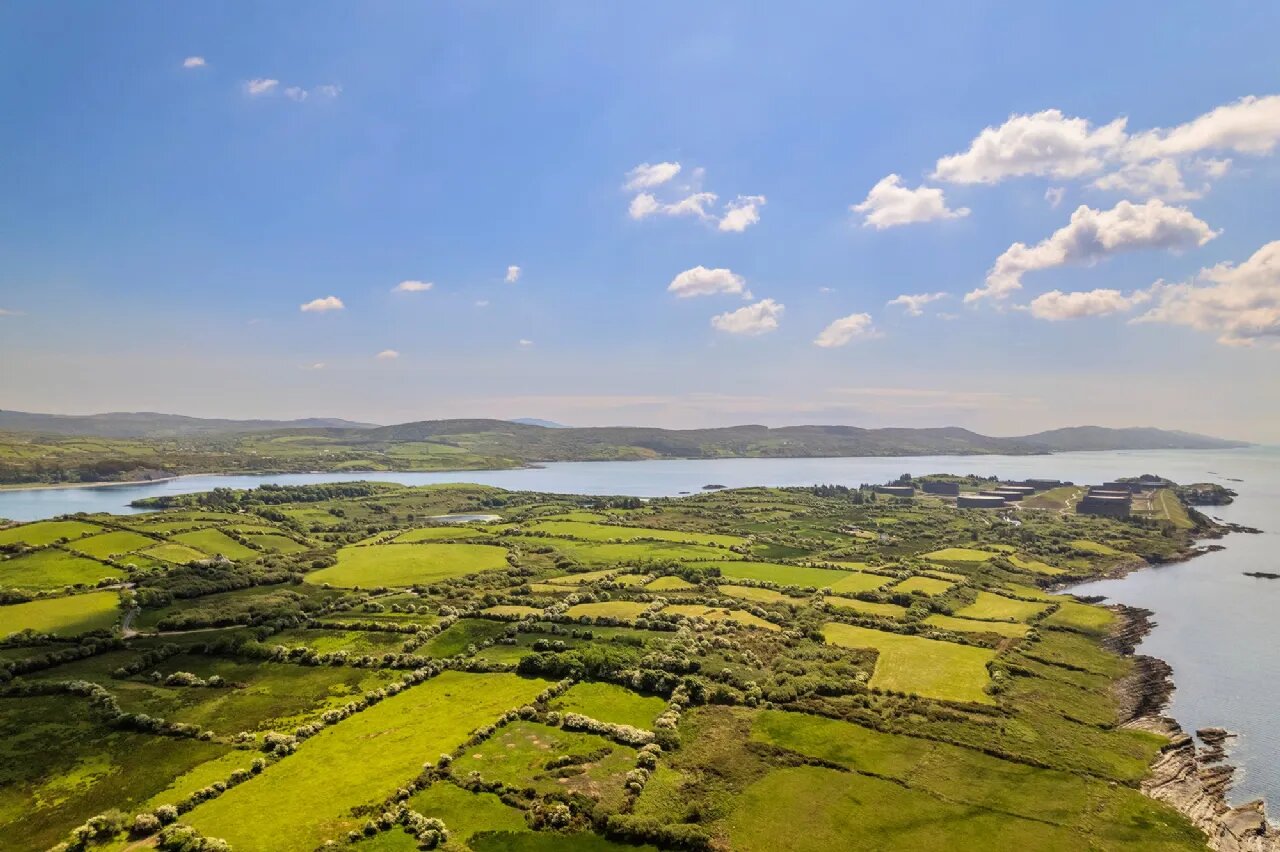
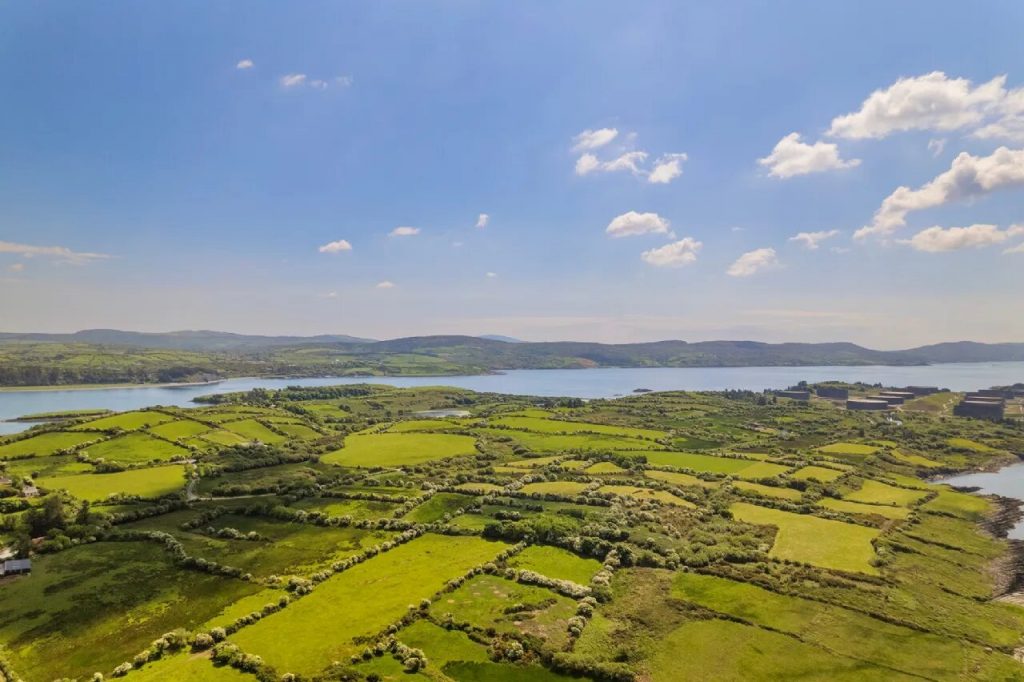
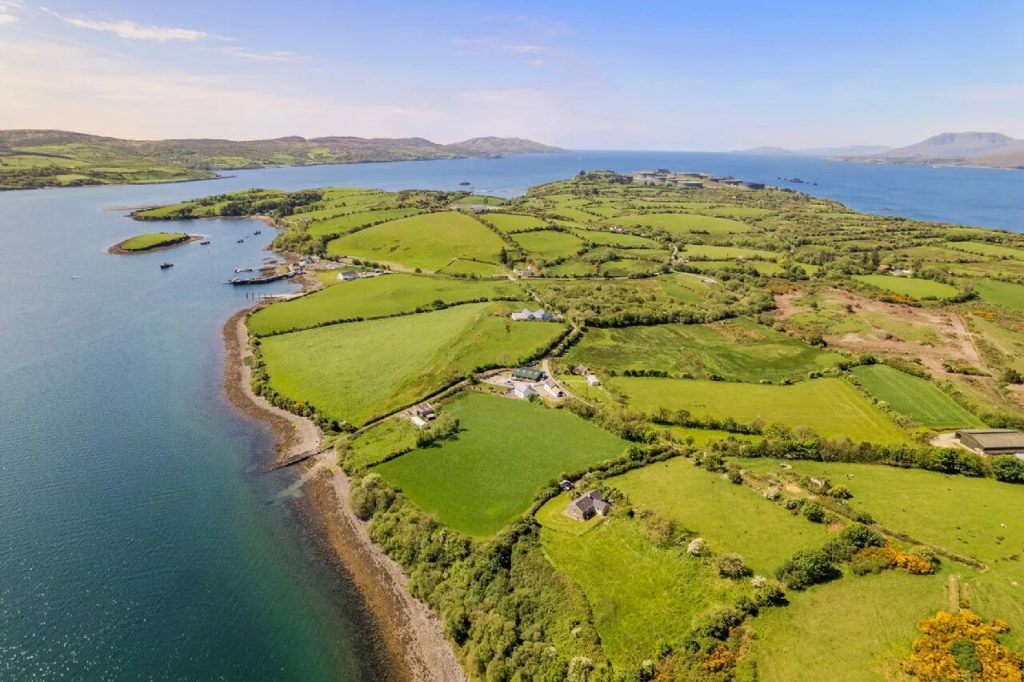
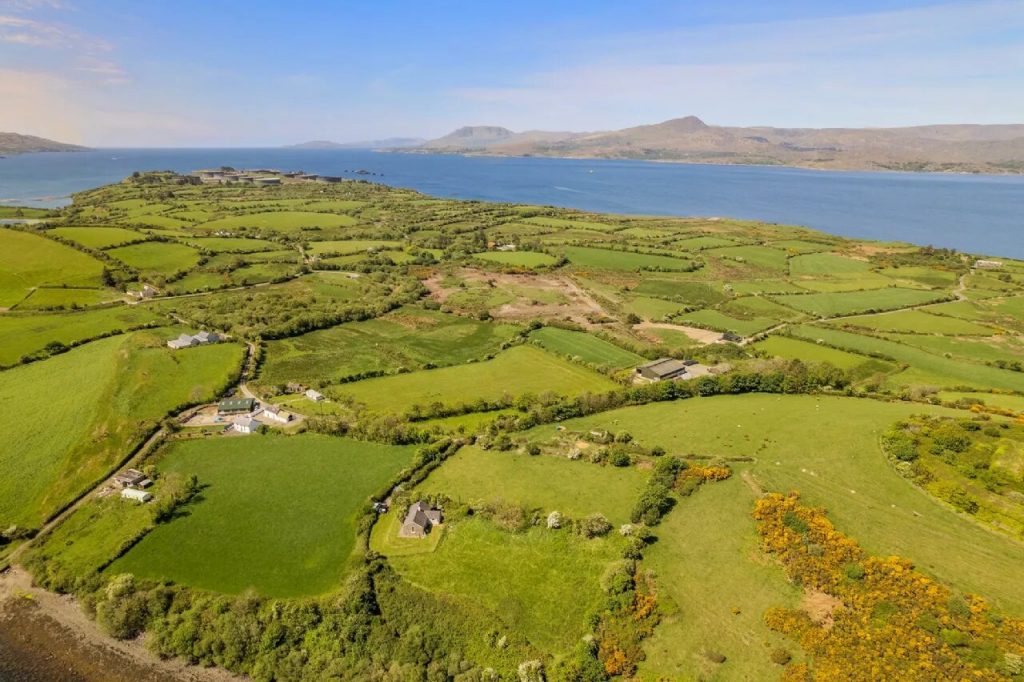
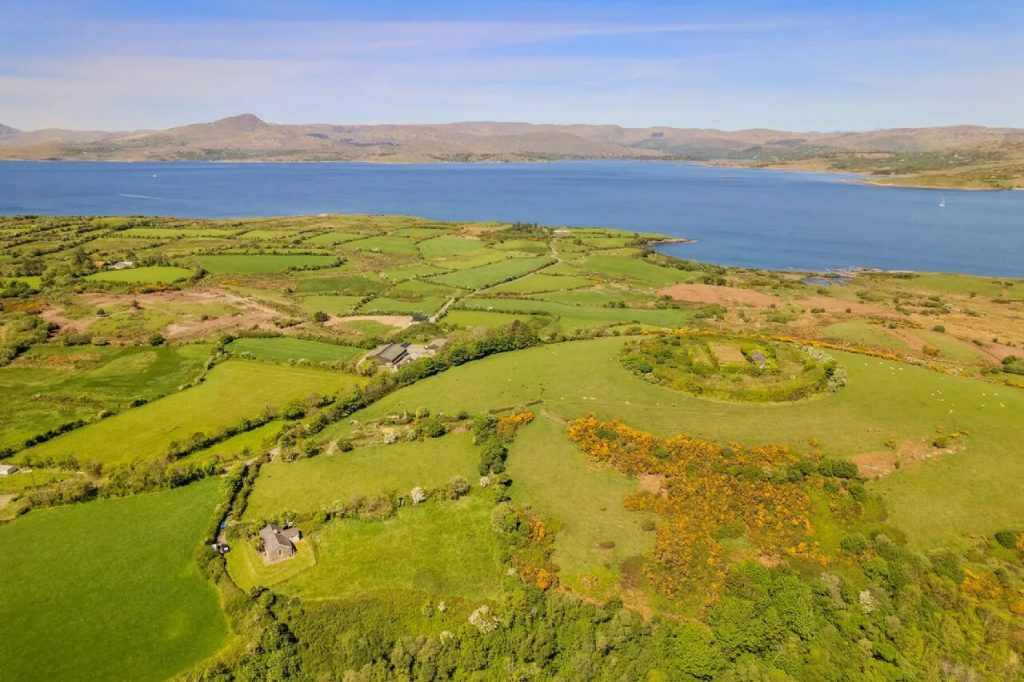
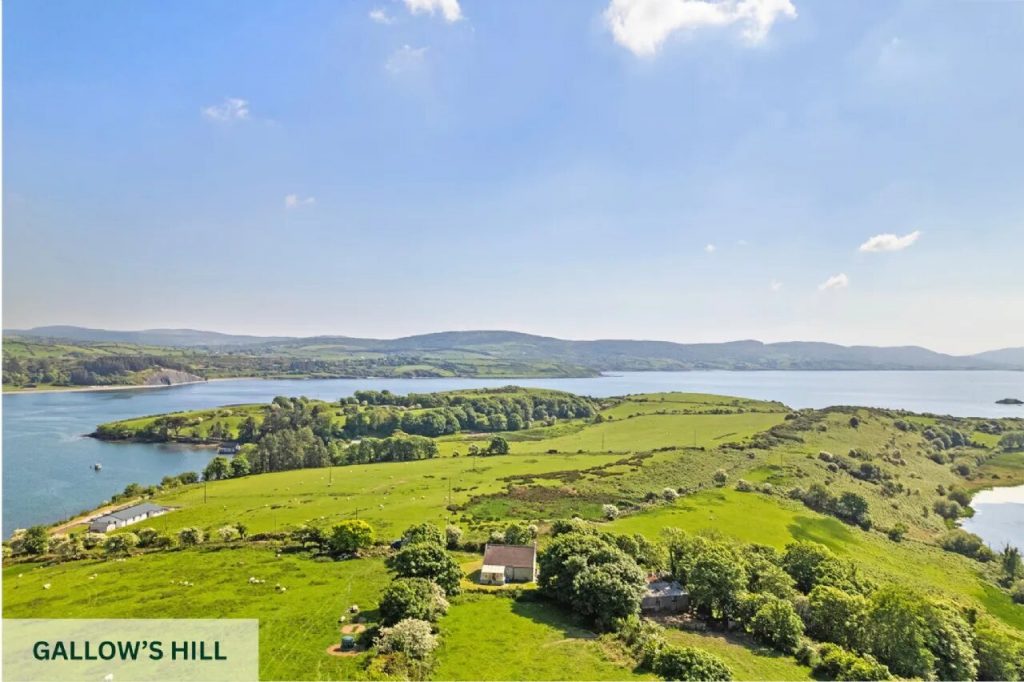
A collection of properties and land extending to approx. 91.4 hectares/ 226.2 acres on Whiddy Island, including the adjoining Rabbit Island.
FOR SALE BY PRIVATE TREATY OR TENDER AT A LATER DATE
Maps and brochure available on request
Whiddy Island’s storied past reaches back into the depths of prehistory, with archaeological estimates suggesting early human habitation as far back as 4500 BC. By the 6th century AD, the island had earned the name Vod Iy, meaning “Holy Island,” in reference to its spiritual significance. At that time, at least two monasteries and a priory were established here, marking it as a place of quiet religious devotion. In 1171, the High King of Ireland granted land on the island to displaced monks from Cong, further enhancing its ecclesiastical status. The island was also home to the O’Sullivan clan, who came to control the bay and inner harbour. Together with the monastic community, they rebuilt a stone castle remnants of which still stand today cementing Whiddy’s dual role as both a sanctuary and a stronghold.
By the late 17th century, the island transitioned to new ownership when Captain Richard White, an English settler, acquired the land. His son, later known as Counsellor Richard White, was born on the island in 1701 and would go on to purchase the grand estate now known as Bantry House. During the 1700s, Whiddy Island became a major hub for the pilchard fishing industry, supporting a fleet of 186 boats and housing three large curing facilities known as Fish Palaces. At its peak, the island’s population rose to over 800 residents, drawn by its thriving maritime economy.
Whiddy’s strategic location made it a valuable military asset. In 1796, in response to the looming threat of a French invasion under Wolfe Tone, the English constructed three fortified gun batteries on the island. These mounted 18 large cannons to defend Bantry Bay, though the batteries were decommissioned by 1807. The Great Famine of the mid-19th century saw the island’s population decline to around 250, after which Lord Bantry converted portions of the land for deer farming.
In 1918, the eastern end of Whiddy became home to a U.S. Naval Air Station part of America’s World War I presence in Ireland. The base included a seaplane patrol and a high-powered radio station capable of receiving transatlantic signals from as far afield as the United States and Russia. A tragic plane crash killed an American airman just one month after opening, and the base was closed in 1919.
Whiddy’s final major chapter in industrial history came in the modern era. In 1966, Gulf Oil selected the island as the site for a major oil terminal, with construction completed in 1969. The facility was a key piece of national energy infrastructure until disaster struck on January 8th, 1979. The French oil tanker Betelgeuse exploded while unloading crude oil, resulting in a catastrophic fire that destroyed much of the jetty. Fifty men and one woman lost their lives in what remains Ireland’s worst maritime disaster known today as the Whiddy Island Disaster or the Betelgeuse Incident. The terminal has since been repurposed for the storage of part of Ireland’s strategic oil reserves.
Despite its complex and at times dramatic history, Whiddy Island retains its quiet dignity and natural grace. Its layered past spanning early Christianity, Gaelic lordships, imperial conflicts, and modern industry lends a profound sense of place to this remarkable island, where historical echoes sit gently amid tranquil landscapes and coastal beauty.
THIS HOLDING IS BEING OFFERED FOR SALE BY PRIVATE TREAY OR TENDER AT A LATER DATE EITHER IN ITS ENTIRETY OR IN SEPARATE LOTS BELOW
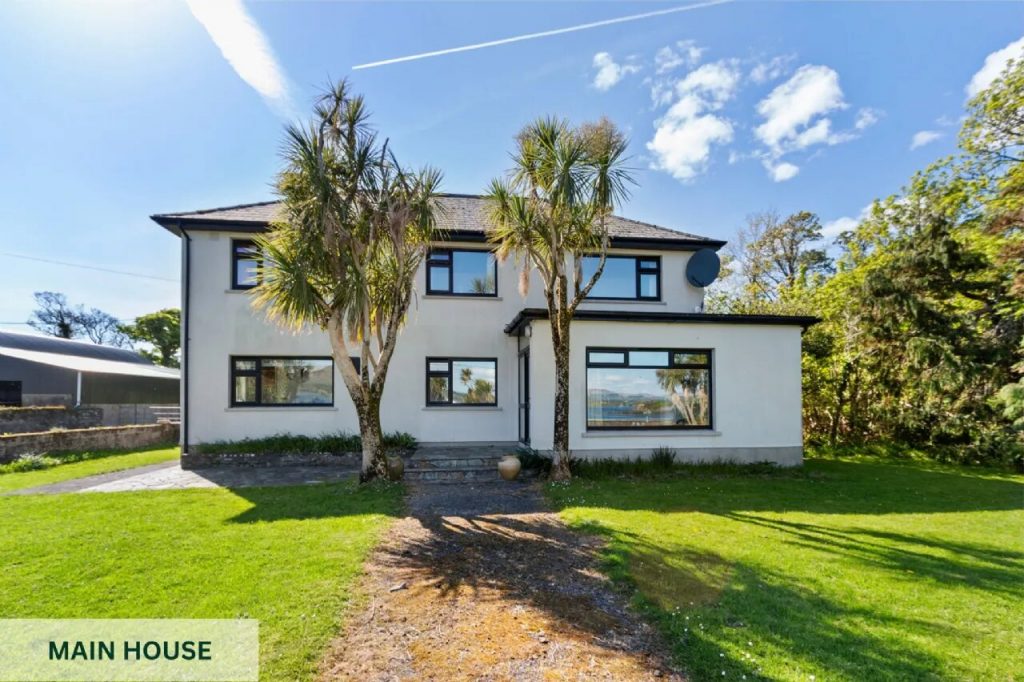
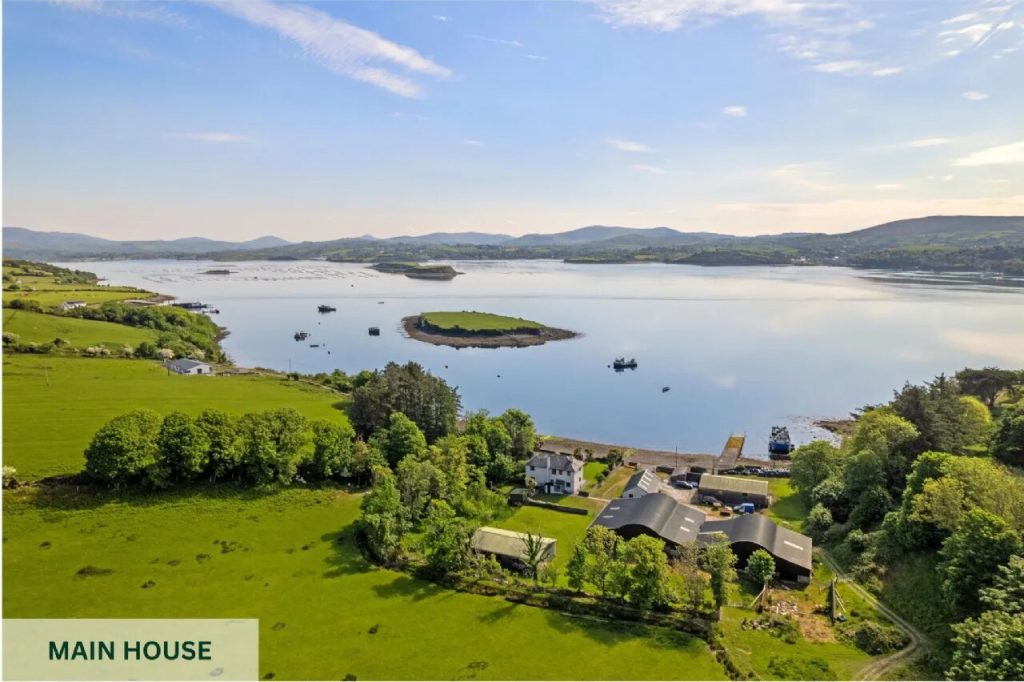
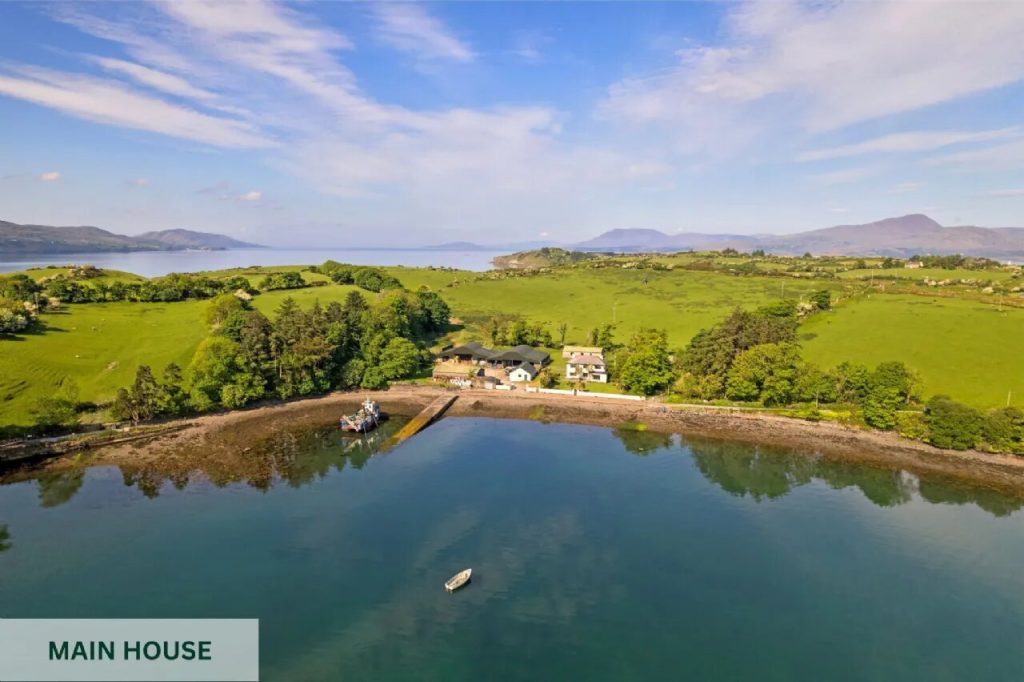
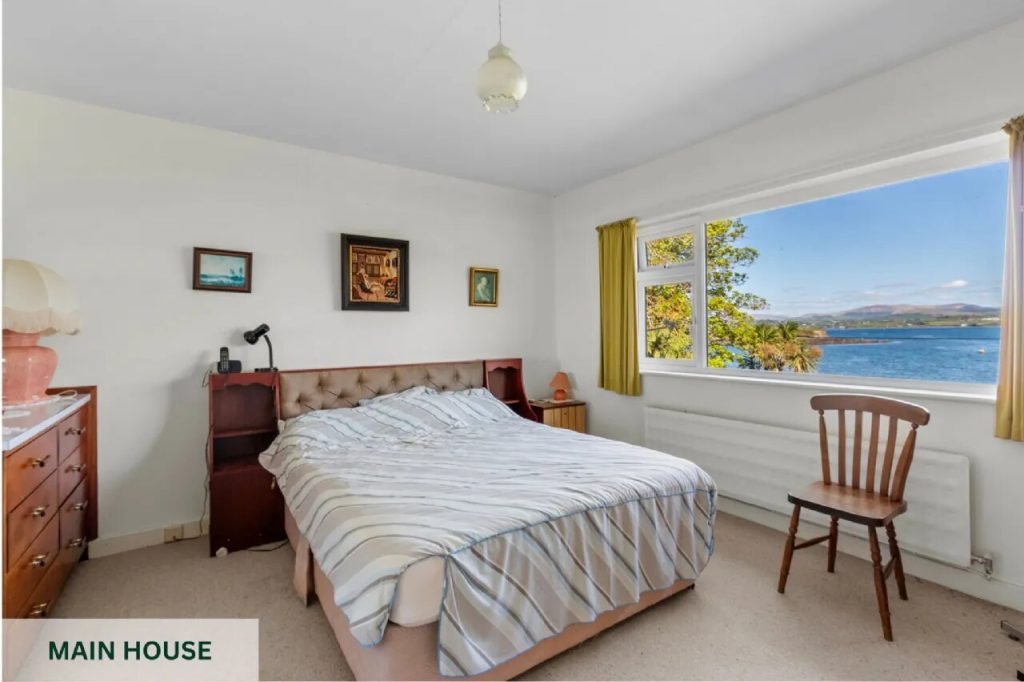
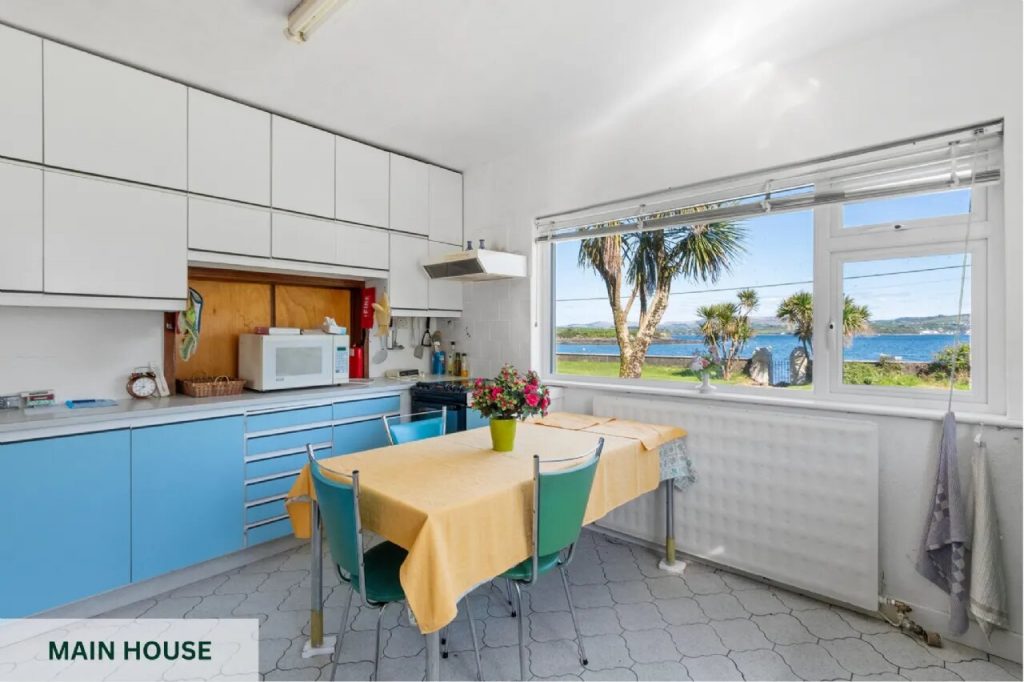
Main House, Outbuildings, and approximately 75.7 hectares / 187.1 acres, Trawnahaha, Whiddy Island, Bantry Bay, P75 EF25
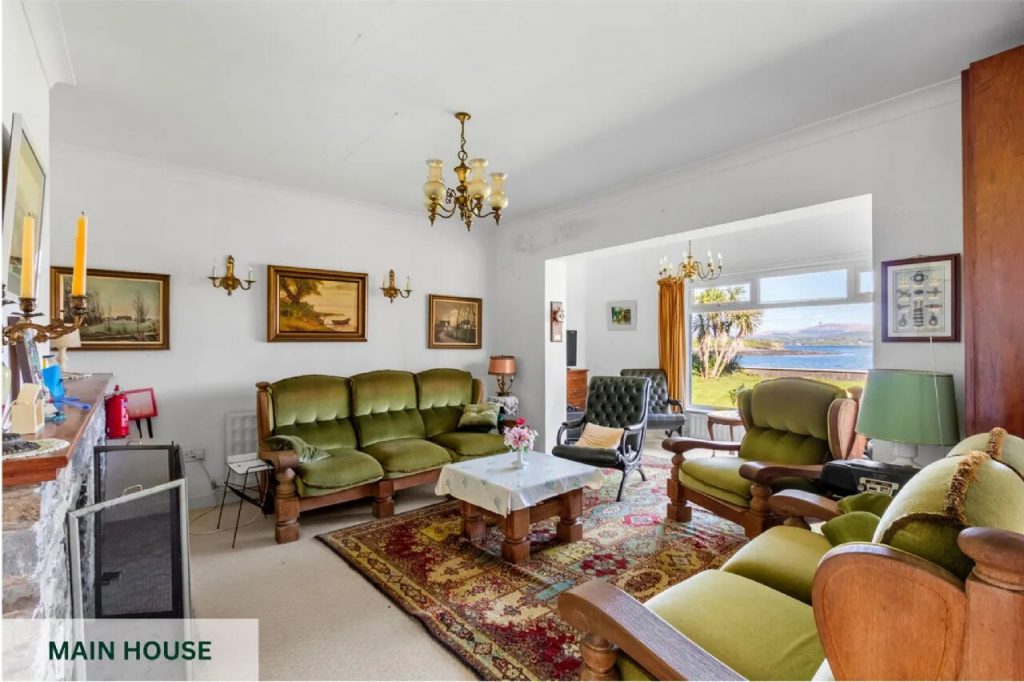
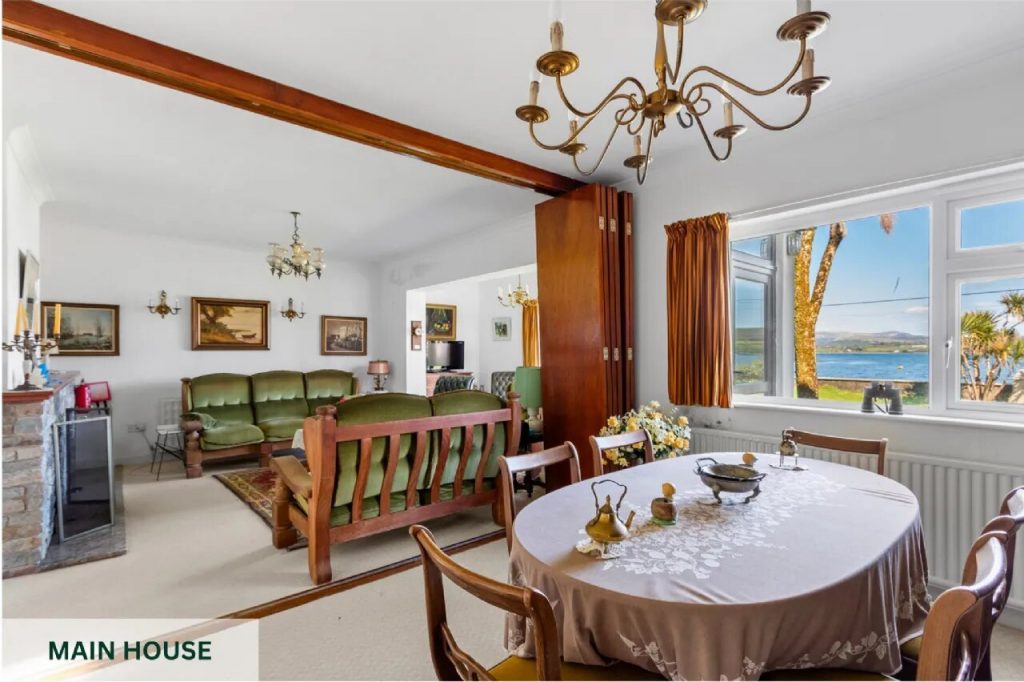
This exceptional island holding features a two-storey detached main house, occupying a prime seafront position on Whiddy Island. Set against the spectacular backdrop of Bantry Bay, the property enjoys uninterrupted coastal views and direct water access via its own private slipway an increasingly rare amenity that greatly enhances both lifestyle appeal and practical value.
The main house offers a solid structure and a versatile layout, positioned to take full advantage of its coastal outlook. Its elevated setting captures natural light throughout the day and provides commanding views over the bay and the surrounding landscape, offering a peaceful and private place to enjoy the tranquillity of island life.
This exceptional estate of approximately 75.7 hectares / 187.1 acres is located directly on the water and combines fertile, gently rolling farmland with outstanding development potential. Currently laid out mainly as pasture and supported by well-maintained agricultural out buildings, it is highly suitable for livestock farming – yet is possibilities extend far beyond.
With is generous acreage, private slipway, and existing residence, the property offers ample scope for various uses: tourism, recreation, wellness, water sports, or an exclusive private retreat. A unique opportunity for investors, entrepreneurs, or those seeking peace and vision in one of the most idyllic and sought-after areas of West Cork.
BER:D2
BER Number: 118566520
EPI: 284.09 kWh/m²/yr
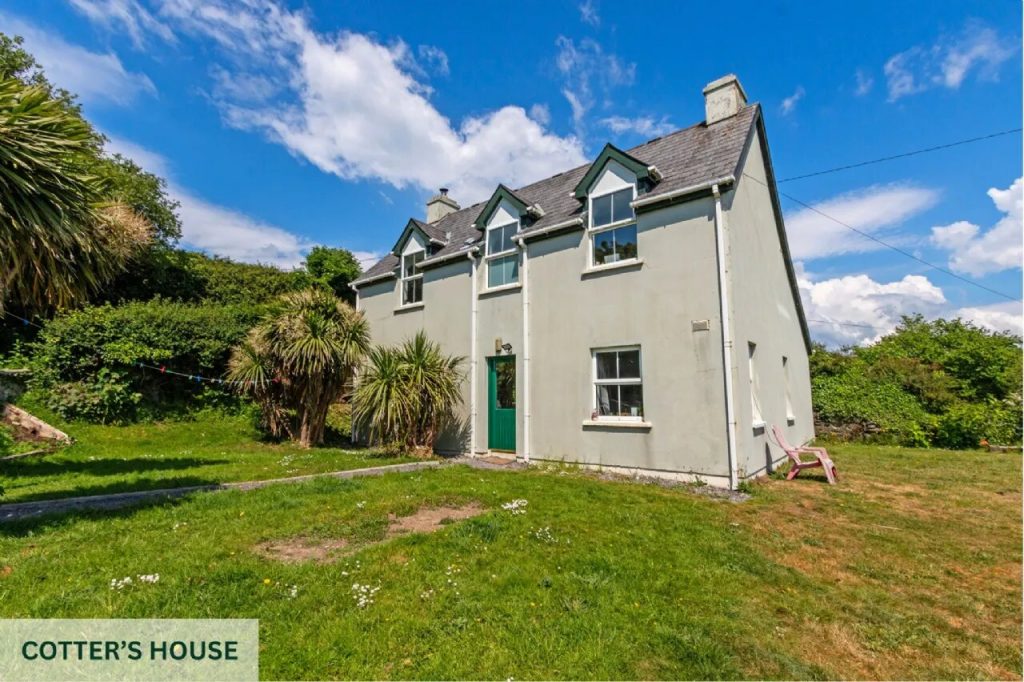
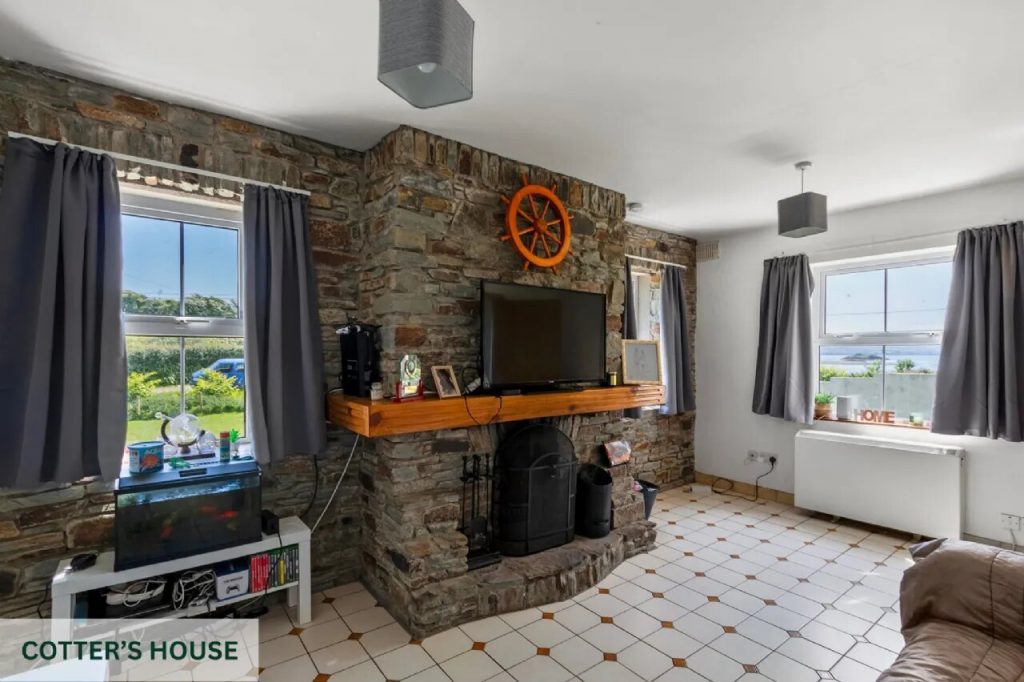
Cotter’s House, Kilmore, Whiddy Island, Bantry Bay, P75 V180
A two-storey dwelling situated on its own grounds of approximately 0.176 hectares / 0.440 acres featuring a hall, sitting room, kitchen, four bedrooms, and two bathrooms. The property also includes a detached storage shed and has a total floor area of approximately 115m². The property require some modernisation and upgrades.
BER:C3
BER Number: 116733759
EPI: 210.52 kWh/m²/yr
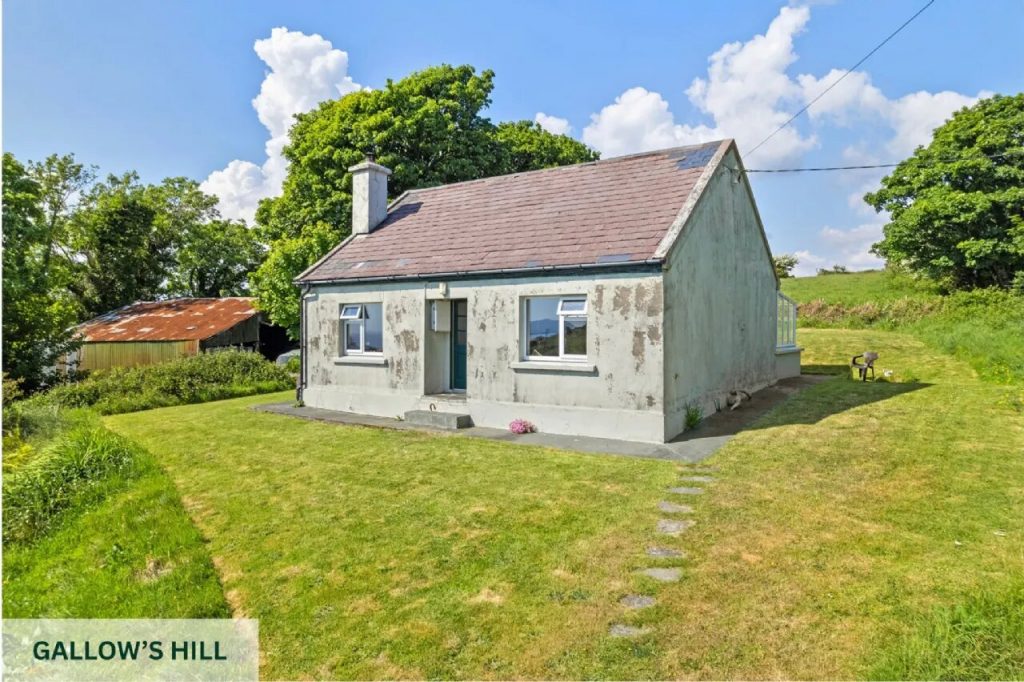
Gallow’s Hill, Trawnahaha, Whiddy Island, Bantry Bay, P75 T254
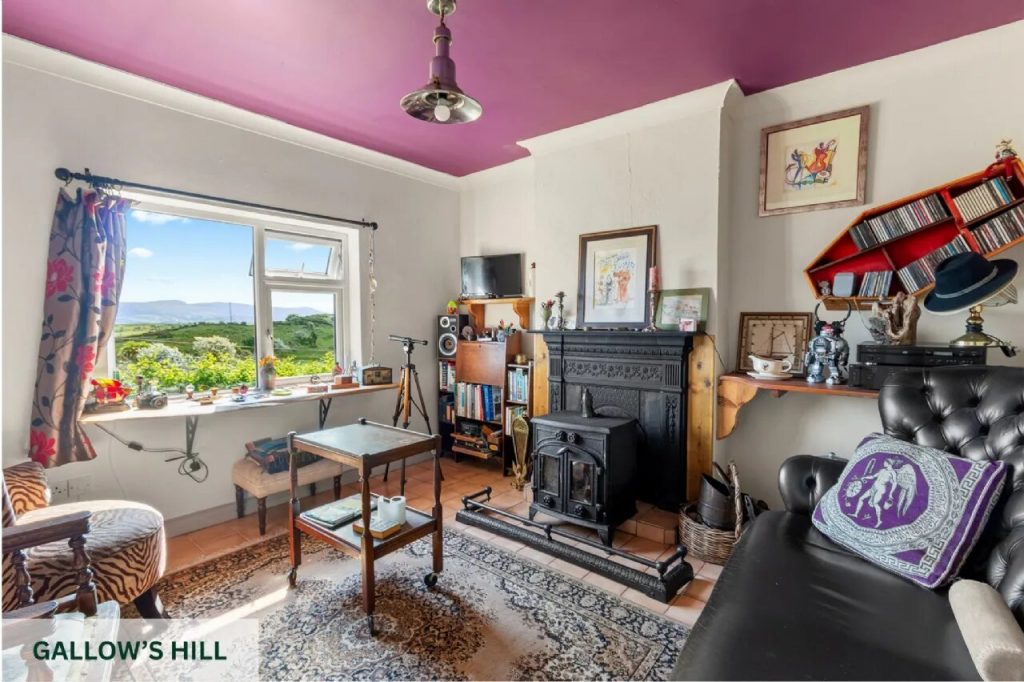
A single-storey dwelling situated on its own grounds of approximately 0.207 hectares / 0.511 acres comprising a sitting room, kitchen, conservatory, two bedrooms, and a bathroom, with a total floor area of approximately 64m². The property will require renovations and upgrades.
BER: F
BER Number: 118566579
EPI: 409.04 kWh/m²/yr
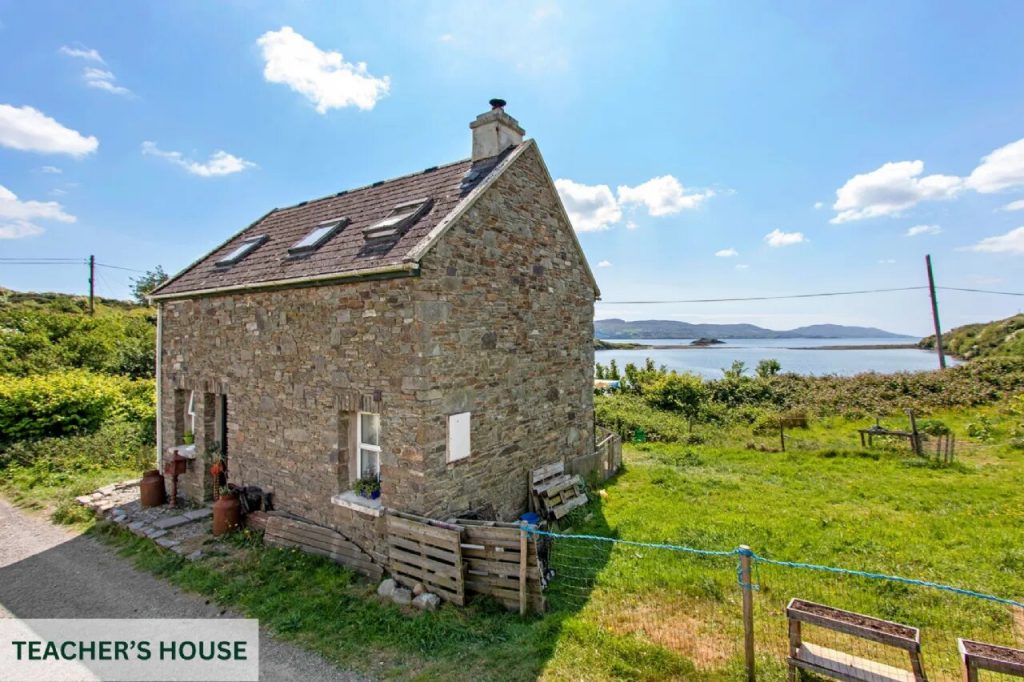
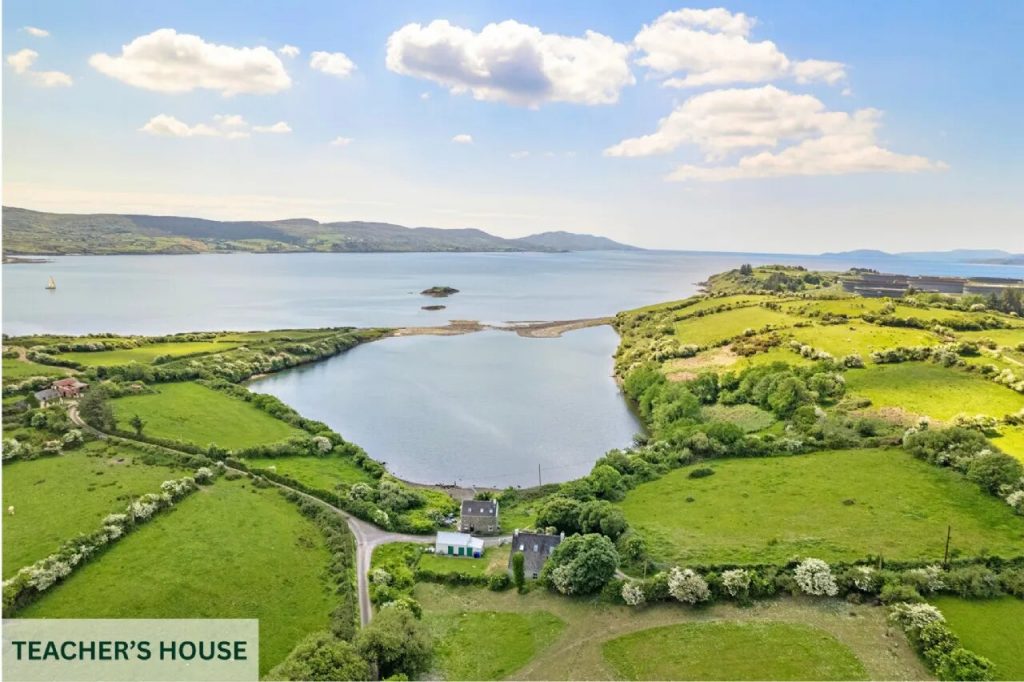
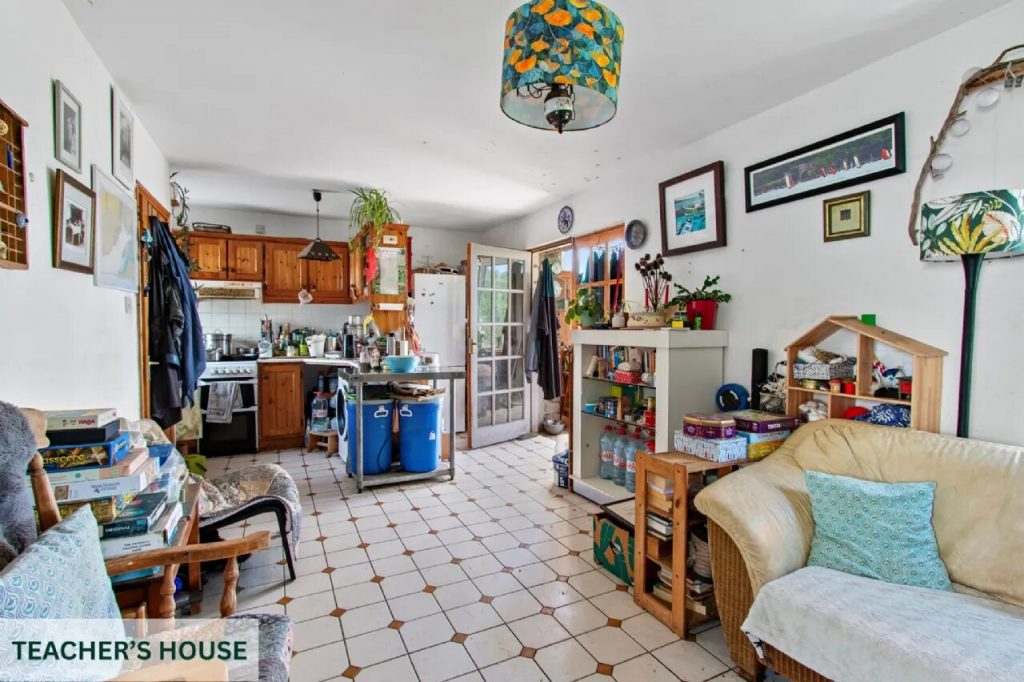
Teacher’s House, Kilmore, Whiddy Island, Bantry Bay, P75 XW57
A charming two-storey dwelling set on its own grounds of approximately 0.212 hectares / 0.524 acres offering a blend of character and traditional design. The property features a sitting room, kitchen, conservatory, two bedrooms, and a bathroom, with a total floor area of approximately 72m². The home provides a comfortable living space but may require some renovations and modernisation to meet contemporary standards.
BER:F
BER Number: 118566835
EPI: 409.67 kWh/m²/yr
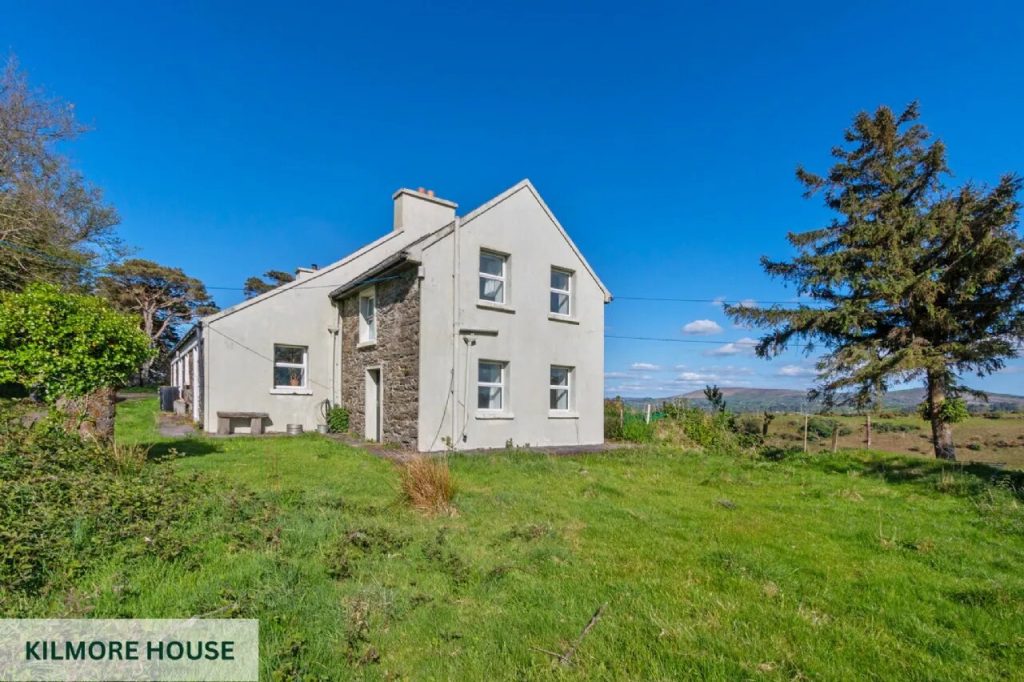
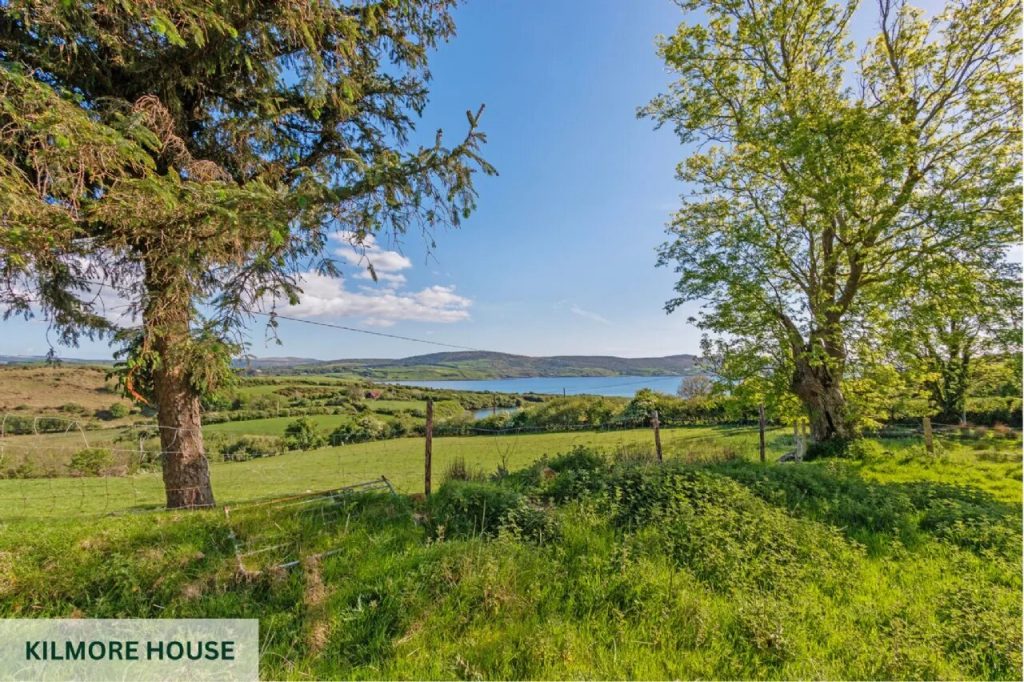
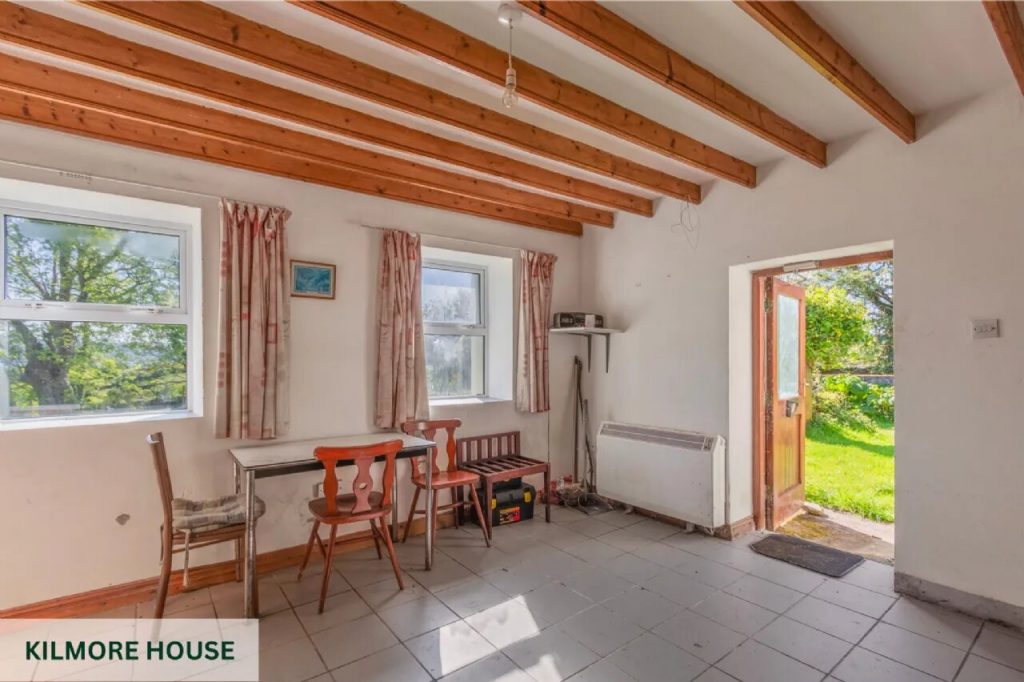
Kilmore House with adjoining 1 bedroom apartment, Kilmore, Whiddy Island, Bantry Bay, P75 VK77
A two-storey dwelling with an adjoining one-bedroom apartment, set on approximately 0.388 hectares / 0.959 acres. The main house features a porch, sitting room/dining room, kitchen, three bedrooms, and two bathrooms, with a total floor area of approximately 122m². The adjoining apartment offers an open-plan kitchen, sitting room/dining area, one bedroom, and a bathroom, covering approximately 34m². both properties will require upgrades.
Kilmore House BER: E2
BER Number: 118571918
EPI: 351.29 kWh/m²/yr
1 bedroom apartment BER: G
BER Number: 118571405
EPI: 450.24 kWh/m²/yr
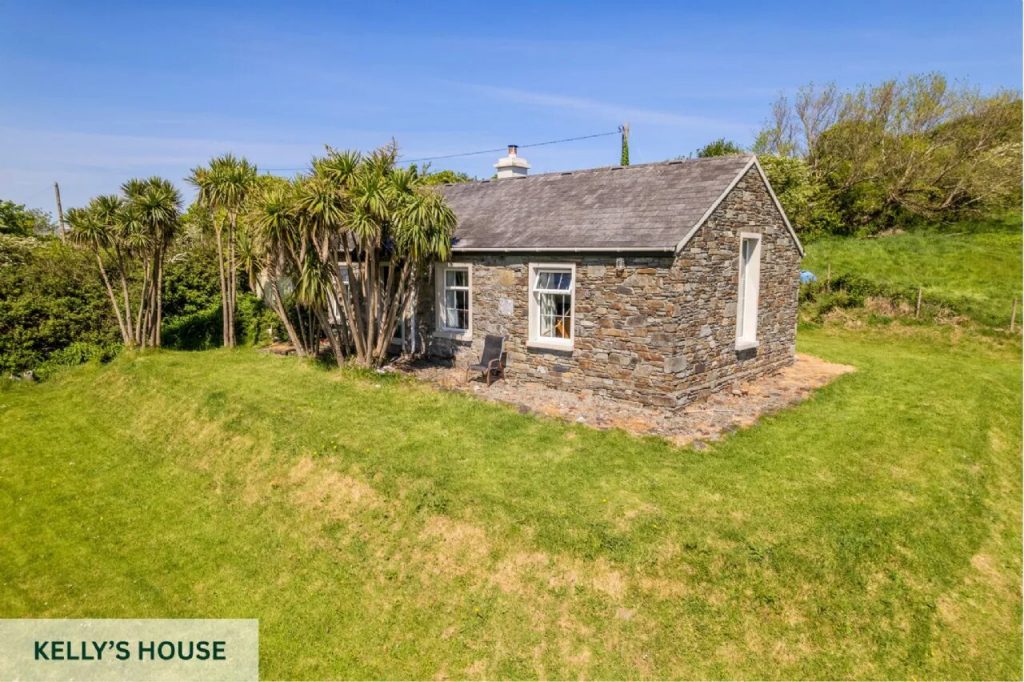
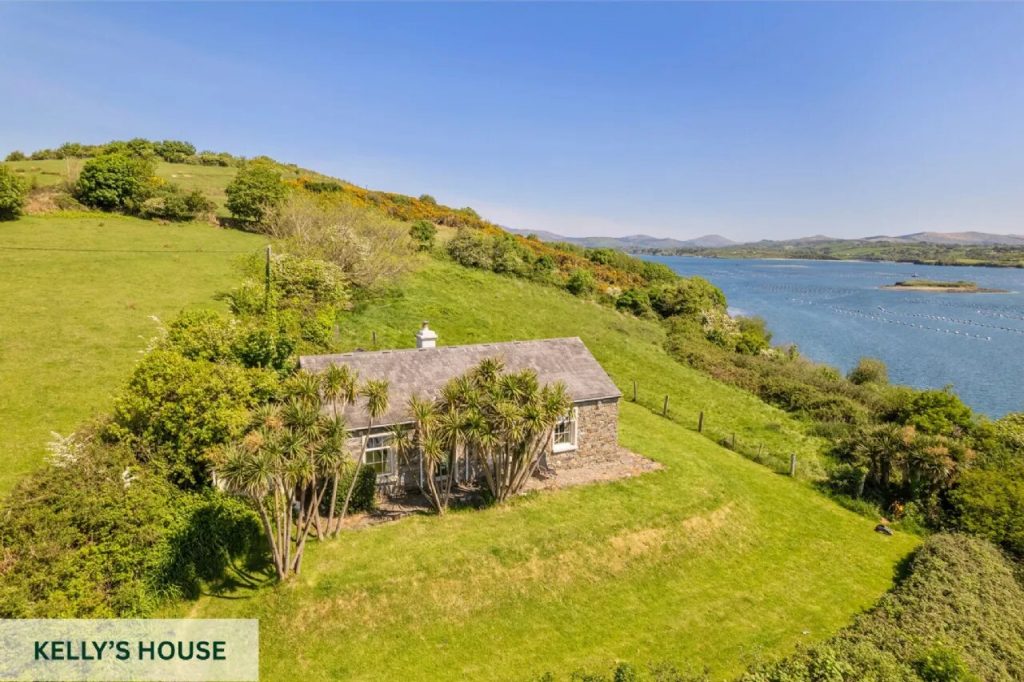
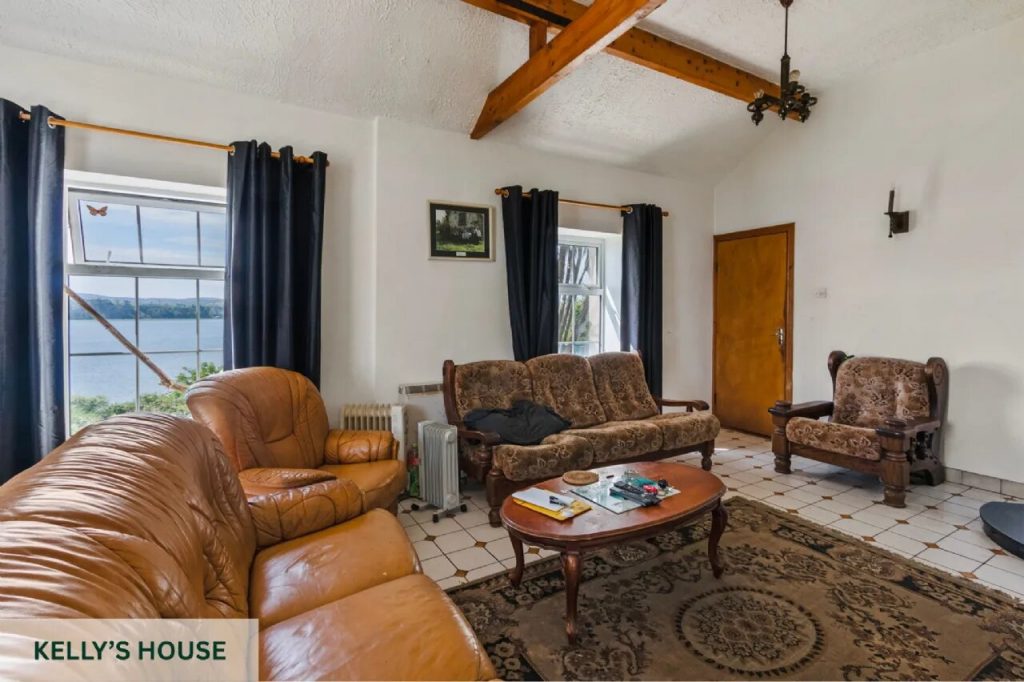
Kelly’s House, Trawnahaha, Whiddy Island, Bantry Bay, P75 A008
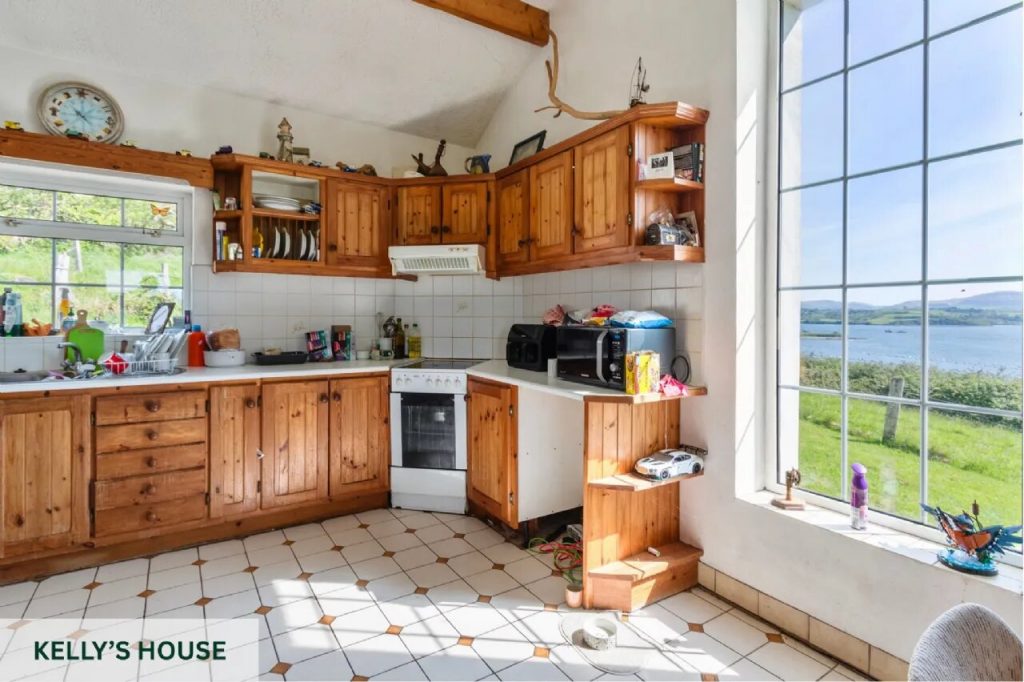
A charming single-storey dwelling set on approximately 0.592 hectares / 1.463 acres benefiting from direct sea frontage. The property offers lovely views and there is a pathway which leads down to the sea. The property features an open-plan kitchen, sitting room, and dining area, along with three bedrooms, a bathroom, and a storage shed. With a total floor area of approximately 69m², the home is fully furnished.
BER: E2
BER Number: 118567072
EPI: 359.74 kWh/m²/yr
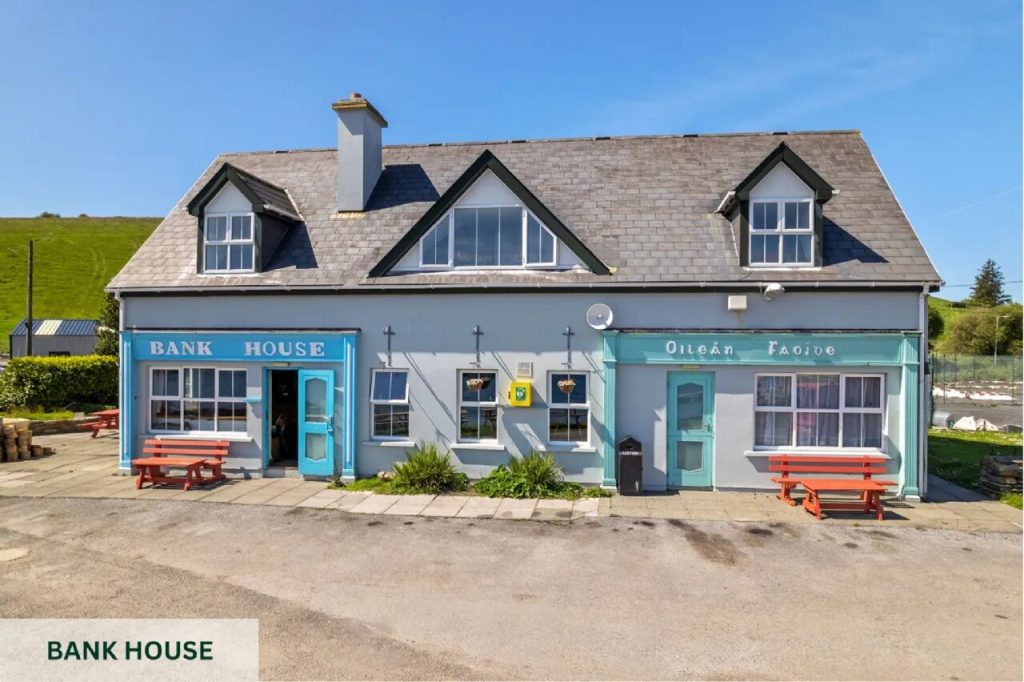
Bank House Restaurant & Bar & 4 bedroom apartment, Trawnahaha, P75 FN77
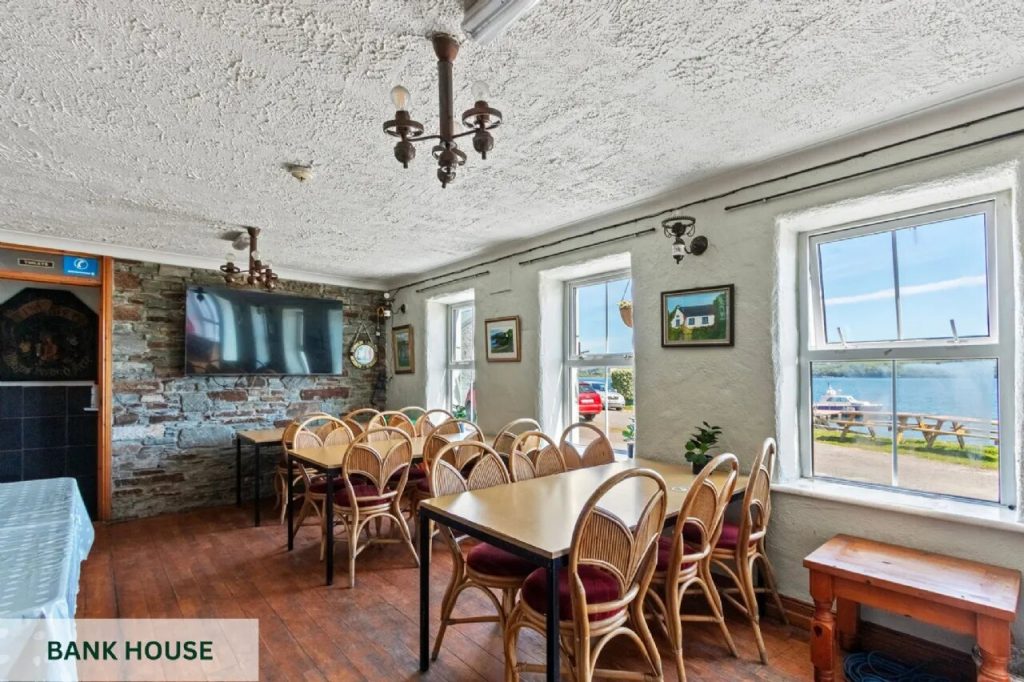
A traditional-style restaurant and bar extending to approximately 105m², set on approximately 0.516 hectares / 1.384 acres featuring a spacious dining area, two toilet facilities and a fully equipped kitchen. The property also incorporates the historic old creamery shed, adding to its character and charm. Adjacent is a one bedroom apartment with a bathroom extending to approx. 22m². The four bedroom apartment is directly over the bank house restaurant and offers spacious accommodation extending to approximately 106m² including a sitting room, kitchen, WC, two bathrooms and three bedrooms.
Restaurant BER: D1
BER Number 118567973
EPI: 255.73 kWh/m²/yr
Apartment BER: C3
BER Number: 118571173
EPI: 204.61 kWh/m²/yr
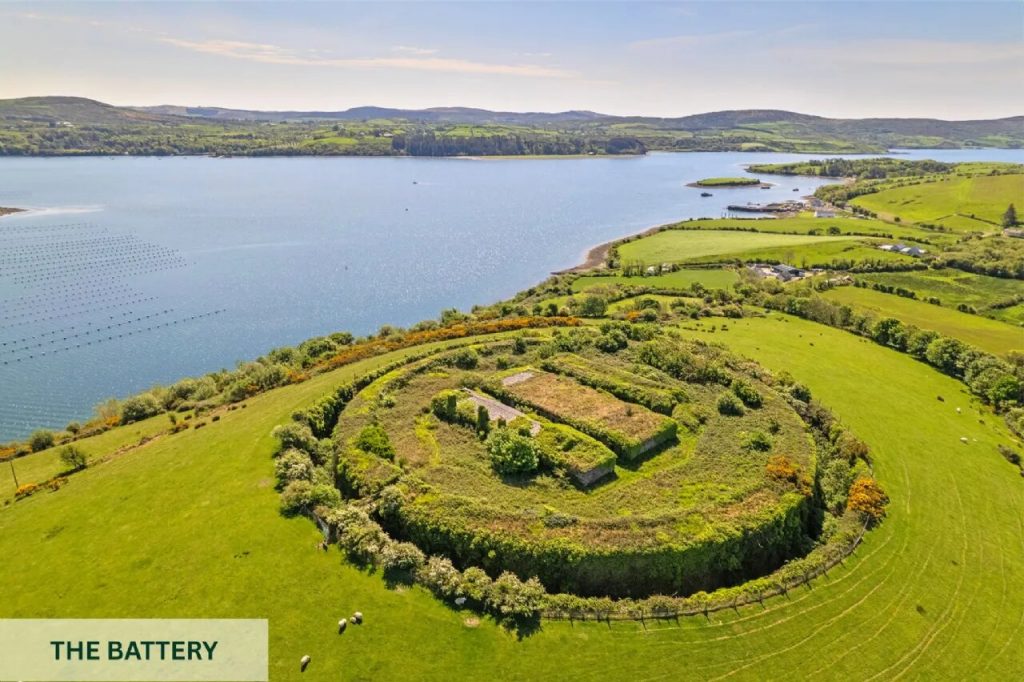
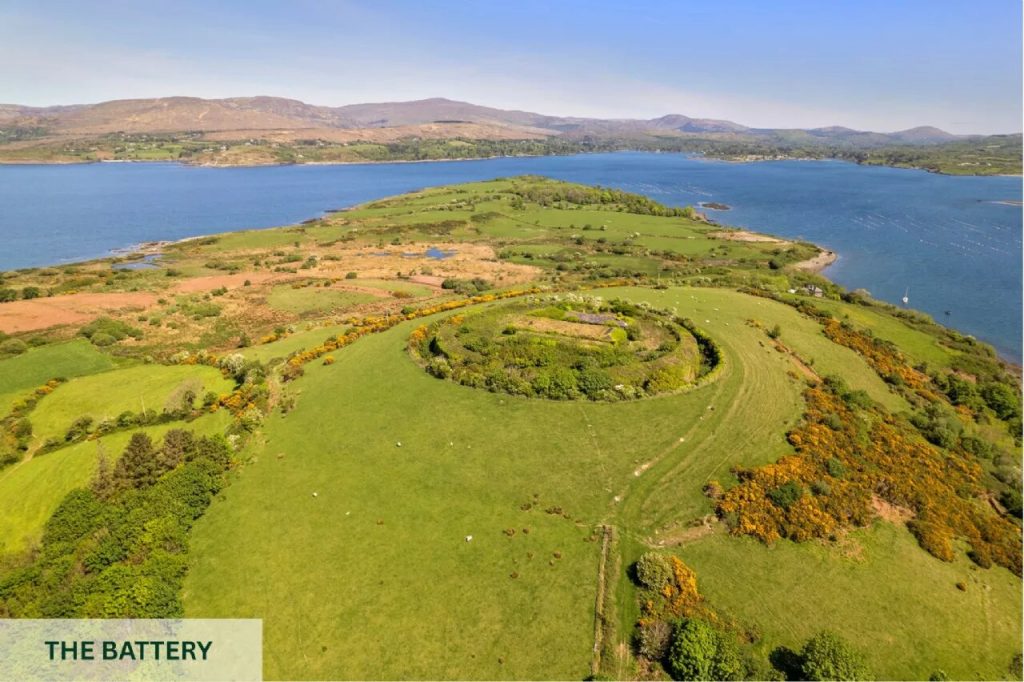
The Battery on approx. 12.130 hectares / 29.973 acres, Crowkingle, Whiddy Island
A historic freestanding circular-plan battery, built in 1804, featuring military barracks, a magazine, and a cast-iron water pump within its interior. This site is part of a significant defensive network constructed by the British Government following the 1796 attempted French invasion of Ireland. Although abandoned in 1807, it remains an imposing structure, offering a striking visual reminder of the strategic importance of this remote location in Ireland’s military history.
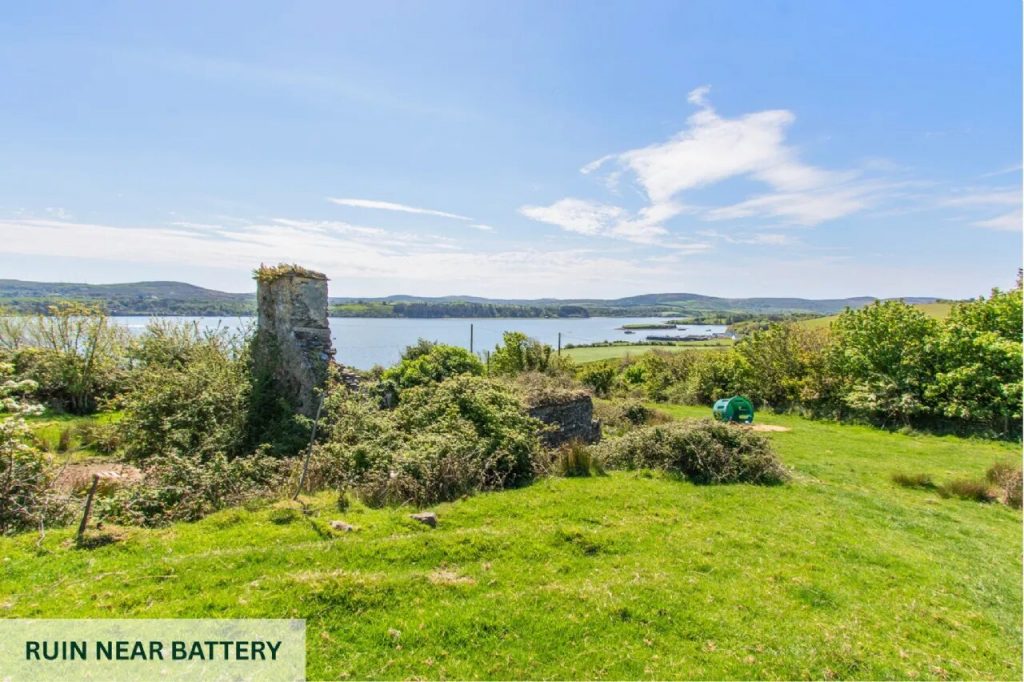
Derelict Ruin Near Middle Battery, Whiddy Island
A derelict ruin set on approximately 0.371 hectares / 0.917 acres with planning permission, subject to renewal. Planning permission on this to be extended. Ideally positioned in close proximity to the historic Middle Battery, this site offers a unique opportunity for restoration in a historically significant and scenic location.
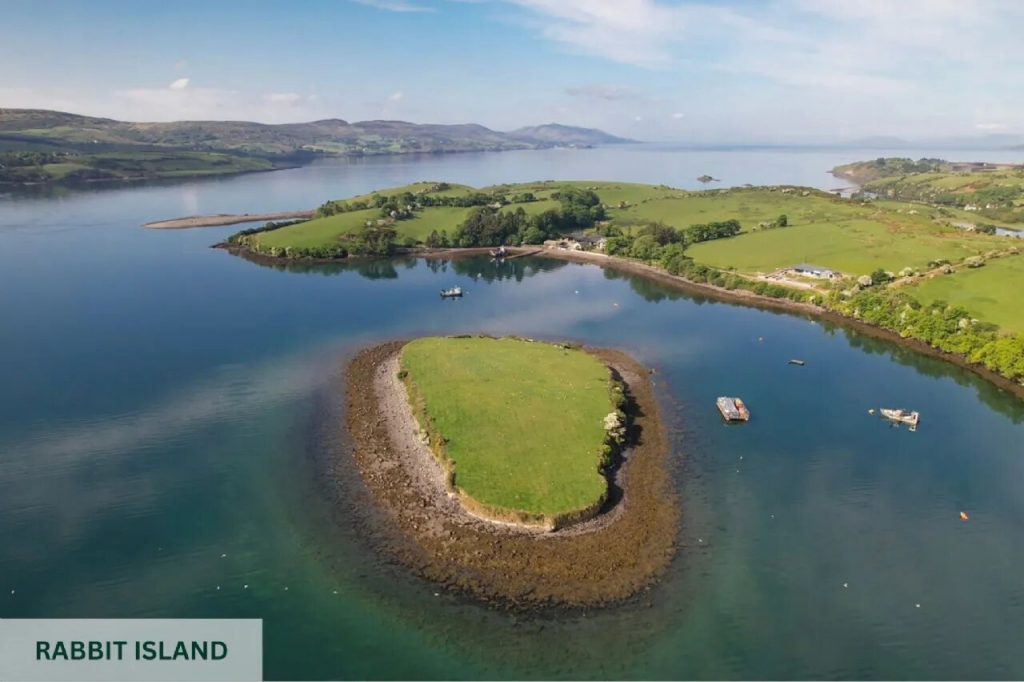
Rabbit Island, Whiddy Island
Rabbit Island is a private island extending to approximately 1.196 hectares / 2.955 acres, located within close reach of Whiddy Island. Offering a unique and secluded setting.
LOCATION
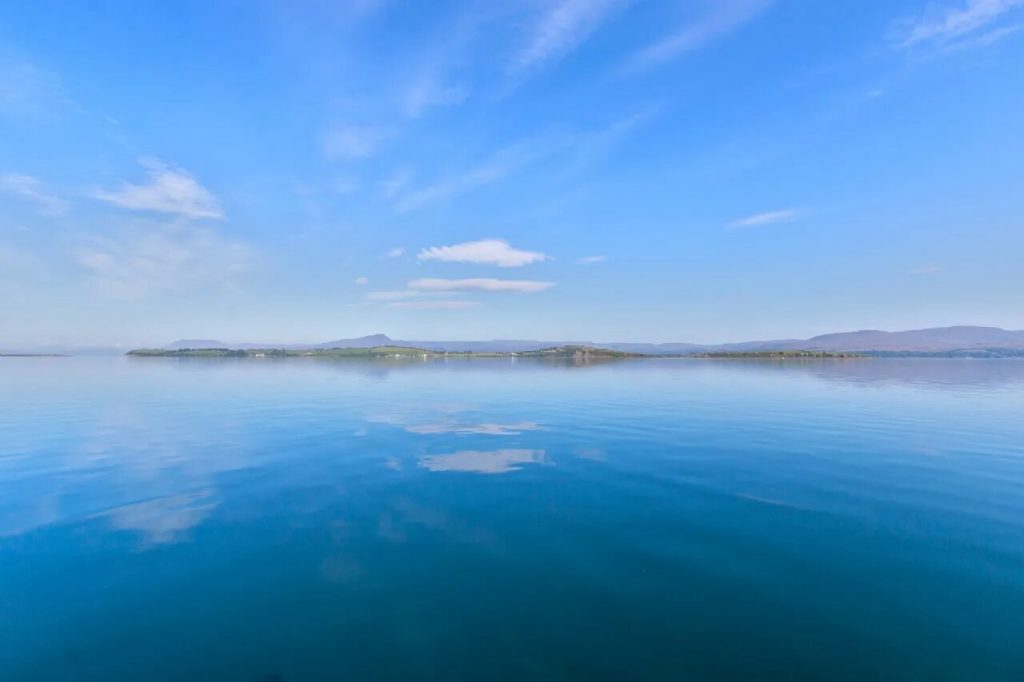
Whiddy Island lies peacefully in the sheltered waters of Bantry Bay, just a short and scenic ferry journey from the historic market town of Bantry, in West Cork. The island measures approximately 5.6 kilometres in length and 2.4 kilometres in width, with softly undulating pastures, glacially sculpted terrain, and fertile soils that continue to support small-scale farming today. Its elevated points offer sweeping views across the bay toward the Caha Mountains, the Beara Peninsula, and the rugged Atlantic beyond. Surrounded by crystal-clear waters, the island remains delightfully unspoiled, with a timeless sense of remoteness that feels far removed from the demands of modern life yet remains wonderfully connected.
Bantry is a lively and characterful town that provides every practical amenity, including independent shops, cafés, restaurants, medical services, supermarkets, and schools. At its heart is the 18th-century Bantry House and Gardens, one of Ireland’s finest stately homes, overlooking the bay and hosting a calendar of cultural events, from classical music festivals to garden tours. A bustling weekly market, artisan food producers, and a thriving arts scene reflect the creative spirit for which West Cork is renowned.
More broadly, West Cork is one of Ireland’s most celebrated regions known for its dramatic coastlines, Blue Flag beaches, gourmet food culture, and easy-going lifestyle. From sailing in Schull and exploring the Sheep’s Head Way to discovering the culinary scene in nearby towns like Skibbereen and Clonakilty, the area offers a balance of outdoor adventure and refined living. For those in search of a slower, richer rhythm of life without sacrificing access to community and culture Whiddy Island represents a rare and exceptional offering in one of Ireland’s most desirable coastal enclaves.
DISTANCES
2 km / 10–15 minutes (including ferry) to Bantry Town
21 km / 25 minutes to Skibbereen
50 km / 50 minutes to Clonakilty
45 km / 1 hour to Kenmare
93 km / 1 hour 40 minutes to Killarney
89 km / 1 hour 45 minutes to Cork City
340 km / 4 hours 15 minutes to Dublin City Centre
350 km / 4 hours 30 minutes to Dublin Airport
All distances/times are approximate.
FERRY SERVICE
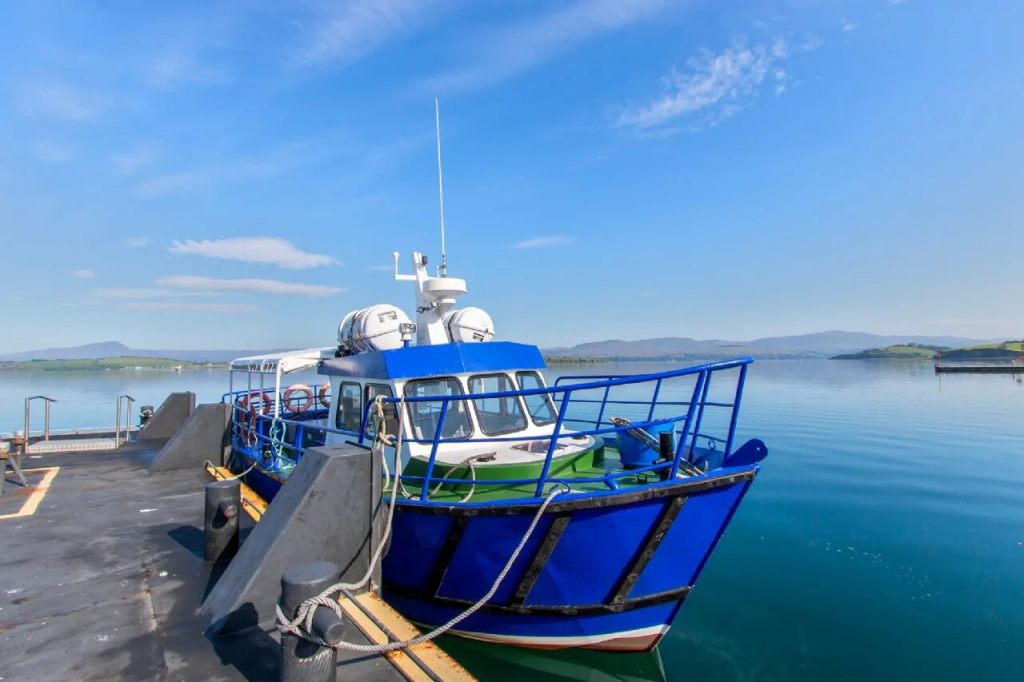
The island is served by a reliable, year-round ferry. Two fully licensed and insured vessels the Lantern II and the Ocean Star III carry passengers comfortably to and from Bantry, with subsidised fares supported by the Department of Rural and Community Development (€8 return for adults, €4 for children, free travel pass holders included).
CONTACT
Roseanne De Vere Hunt
Director
And Head of Sherry FitzGerald Country Homes, Farms & Estates
176 Pembroke Road, Ballsbridge, Dublin 4
T: +353 (0)1 237 6402
E: roseanne.hunt@sherryfitz.ie
Ray O’Neill
Principal
Sherry FitzGerald O’Neill
2 Western Road, Tawnies Upper,
Clonakilty, Co. Cork
T: +353 23 883 3995
E: ray@sherryfitz.ie
Olivia Hanafin
Negotiator
Sherry FitzGerald O’Neill
2 Western Road, Tawnies Upper,
Clonakilty, Co. Cork
T: +353 28 214 04
E: Olivia@sfoneill.ie
PSRA No. 001628 & 004158
Solicitor Details
Flor Murphy
O’Donovan Murphy & Partners Solicitors,
The Quay,
Town Lots,
Bantry, Co. Cork
T: (027) 50808
FIXTURES & FITTINGS
The rented properties are sold as viewed, subject to the furnishings and contents that remain in situ at the end of the lease. The main house and the outbuildings are sold fully furnished, including all contents as present at the time of viewing.